Why 78% of Facebook Leads Never Get Followed Up (And How to Fix It)
TL;DR — Key Takeaways:
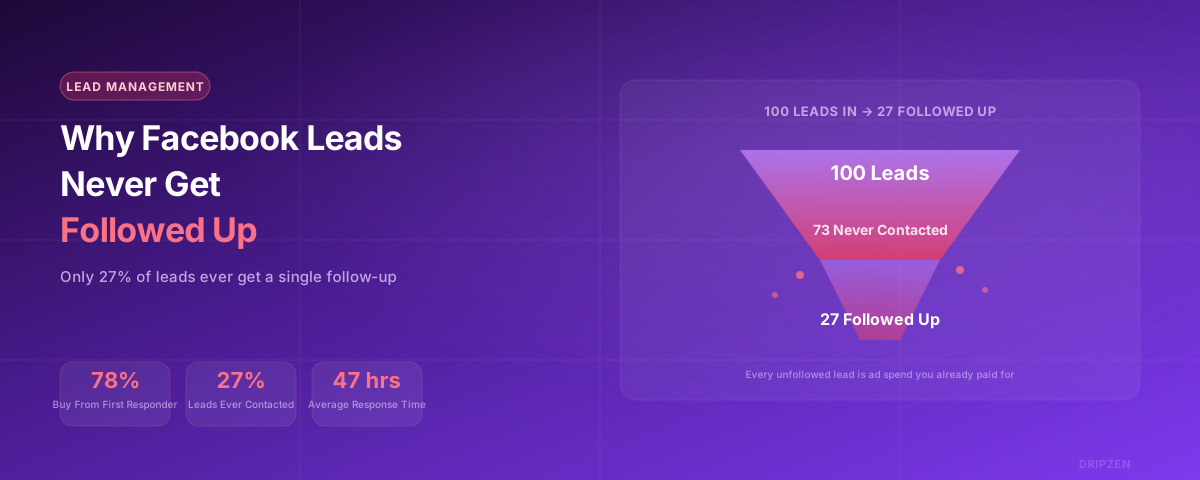
- Only 27% of leads ever get contacted at all by the business that generated them.
- The average company takes 47 hours to respond to a new lead.
- 78% of customers buy from the first business that responds to their inquiry.
- Facebook leads are colder than website leads — they need faster, more persistent follow-up, not less.
- The fix isn't more salespeople — it's an automated system that captures, responds, and follows up without depending on any one person.
Introduction: The Lead Generation Paradox
Your Facebook ads are converting. Leads are flowing in. Your cost-per-lead looks reasonable on paper. But something isn't adding up.
The leads come in — and then nothing. They sit in an email notification. They get buried in a spam folder. Your sales team is "too busy." By the time someone remembers to follow up, the prospect has already bought from a competitor, or forgotten they ever filled out the form.
Spending money on Facebook ads without a follow-up system is like buying a car and never putting fuel in it. The engine works. You're not going anywhere.
This post breaks down what the lead follow-up data actually shows, the five root causes behind unanswered Facebook leads, and the exact system to fix it — without hiring a team of salespeople or living inside your inbox.
The 78% Problem: What the Data Actually Shows
The number in the headline comes from a landmark study out of MIT Sloan, tracking over 15,000 leads and 100,000+ sales calls. The finding was blunt: 78% of customers buy from the first company that responds to their inquiry.
That study wasn't Facebook-specific — but the implications for Facebook advertisers are worse, because Facebook leads are among the slowest to get followed up on. Consider the broader picture:
- Only 27% of leads ever get contacted at all by the business that generated them. Nearly three out of four leads are simply ignored.
- 71% of internet leads are wasted due to poor follow-up. Not bad leads — wasted leads.
- A meaningful share of companies never respond to leads at all.
- Facebook lead forms in particular often go untouched by small businesses for well over 20 minutes on average — an eternity for a mobile-first, low-friction lead.
And the trend is getting worse, not better. Recent research across hundreds of B2B companies found the average lead response time has climbed to 47 hours.
The 5-Minute Rule: Facebook's Hidden Tax
The response-time research is even more damning up close. Contacting a lead within 5 minutes makes you dramatically more likely to reach them than waiting just 30 minutes. Some studies on calling within the first minute show conversion rate lifts in the hundreds of percent.
Facebook leads are different. They're often colder than website form fills — they come from people casually scrolling their feed, not actively searching for a solution. That makes speed even more critical. If someone taps your Instant Form while waiting in a coffee line, and you call 25 minutes later, they've already forgotten about you.
And yet, very few companies actually respond within that 5-minute window. Most are effectively donating their leads to whoever calls faster.
Why This Happens: 5 Root Causes
If the problem is this obvious and the data this clear, why does it keep happening? Here are the five root causes behind Facebook leads that never get followed up.
5. The Expectation Mismatch: Facebook Leads Are Colder
This is the most misunderstood factor of all. Facebook leads are not Google search leads. Someone searching for a specific solution has high intent. Someone who tapped your Instant Form while scrolling past cat videos has much lower intent — for now.
Instant Form leads typically convert to qualified opportunities at a lower rate than website form leads. They're cheaper to acquire, but they need more nurturing, not less. Businesses that treat every Facebook lead like a hot inbound call are setting themselves up to fail. Facebook leads need a different follow-up strategy — one built for lower intent and higher friction.
The Real Cost of This Problem
Let's make this personal. If you're running Facebook ads, you're paying somewhere in the range of $25–$70 per lead depending on your industry. Now run the math: if roughly half of those leads never get a single call, and you're generating 100 leads a month at $50 each, you're flushing thousands of dollars a month down the drain — every month, on leads you already paid for.
But the cost isn't just financial. Every lead that goes unanswered is a customer who now trusts your competitor. Every delayed response is a small reputation hit. And every sales rep giving up after one call attempt is a team member who feels like they're failing — because the system is failing them, not the other way around.
Consumers increasingly expect real-time responses. Speed is the new currency of trust. If your competitor responds in 5 minutes and you respond in 47 hours, you don't have a lead-quality problem. You have a speed problem.
How to Fix It: A 5-Step Action Plan
The good news: this is entirely fixable, and it doesn't require a bigger sales team.
Capture Leads Instantly
The moment a lead submits your Facebook form, your system should know — not via email, via a system that triggers action. Never let a lead sit more than 60 seconds without being logged somewhere trackable.
Respond Within 5 Minutes
This is the most validated finding in all of lead response research. For Facebook leads it's non-negotiable — these users are scrolling, and their attention span is measured in seconds.
Use a CRM — Even a Simple One
You don't need an enterprise platform on day one. You need a system that tracks who contacted which lead, when, and what happened next. Better a simple tool your team actually uses than a powerful one that gets ignored.
Build a Multi-Touch Sequence
One call is not enough. One email is not enough. Most conversions happen after five or more touchpoints — build a sequence, not a single attempt.
Measure and Optimize
Track average response time, contact rate, follow-up attempts per lead, and conversion rate by response speed. What gets measured gets managed.
Your follow-up sequence should look something like: an immediate auto-response confirming receipt, a human phone call within 5 minutes during business hours, a follow-up text if there's no answer, a value-add email on day 1, a second call attempt by day 3, and a longer nurture sequence extending to two weeks. Businesses that combine immediate acknowledgment, fast human follow-up, and persistent nurture consistently out-convert those relying on a single channel.
The DripZEN Difference
Here's the honest truth: you can build this system yourself. You can string together a form tool, SMS, your phone, and a spreadsheet. Many businesses try. But most don't stick with it — because it's complex, because it breaks when someone forgets a step, and because the tools weren't designed for Facebook advertisers specifically.
That's where DripZEN comes in. DripZEN is built for one specific use case: businesses running Facebook ads who need their leads followed up instantly, automatically, and persistently — without wiring together five different tools.
- Instant capture — Facebook Lead Ads connect directly, no manual imports, no CSV downloads.
- 5-minute response automation — every lead triggers an immediate notification the moment it arrives.
- Built-in pipeline — track every lead, every touchpoint, every outcome, with zero adoption friction.
- Persistent follow-up — leads stay visible and assigned, so nothing dies because one rep gave up after a single call.
- Mobile-first — manage the entire pipeline from your phone, from wherever you are.
DripZEN isn't a generic CRM. It's built for the reality of Facebook lead generation: high volume, lower average intent, and a need for instant, persistent engagement. While competitors take 47 hours to respond, DripZEN users can be engaging leads in minutes — the exact window that dramatically raises the odds of ever reaching them at all.
The Real Problem Isn't Laziness — It's Architecture
Here's something the statistics don't fully capture: most business owners are genuinely shocked when they learn their real follow-up numbers. They think their team is calling every lead. They think their response time is "pretty fast." They think the problem is lead quality.
The uncomfortable truth is that most businesses have no idea what their actual follow-up rate is. They know their cost per lead. They know their ROAS. Ask them what percentage of leads got a follow-up call within 24 hours, and you'll get a blank stare.
This is an architecture problem, not a people problem. You can't fix follow-up with motivation alone. You can't fix it by hiring one more sales rep. When 100 leads come in and your best rep can call 20 of them, 80 leads fall through the cracks — no matter how motivated the team is.
The businesses winning on Facebook right now aren't the ones with the best ads. They're the ones with the best systems — a follow-up architecture that scales independently of human bandwidth.
Conclusion: Stop Funding Your Competitor's Growth
Every unfollowed Facebook lead is a gift to your competitor. You paid for the ad, the click, and the form fill — and then you handed the prospect to whoever calls them first.
The data is unambiguous: most customers buy from the first business that responds, most leads never get contacted at all, and average response times are measured in days, not minutes. That's not an outlier. That's the industry standard.
It doesn't have to be your standard. Capture instantly, respond within 5 minutes, use a CRM your team actually opens, build a multi-touch sequence, and measure everything. You don't need a bigger ad budget — you need a better follow-up system. The leads you're already generating are worth more than you think. You just have to actually reach them.
Never Let Another Facebook Lead Go Cold
DripZEN connects directly to your Facebook Lead Ads and puts every lead in front of your team within seconds of submission — with a visual pipeline that makes follow-up impossible to forget.
- Real-time lead sync — no manual CSV exports, no missed leads
- Instant push notifications — follow up before competitors do
- Visual pipeline — New → Contacted → Qualified → Won
- Team assignment — clear ownership, zero confusion
Frequently Asked Questions
Why do most Facebook leads never get followed up?
Most businesses have no dedicated follow-up system — leads sit in inboxes or spreadsheets, sales teams are overwhelmed, and there's often no CRM to track who contacted whom. It's an architecture problem, not a motivation problem.
How fast should I respond to a Facebook lead?
Within 5 minutes. Contacting a lead within 5 minutes makes you dramatically more likely to reach them than waiting 30 minutes, and Facebook leads are especially time-sensitive because they come from people casually scrolling, not actively searching.
Why are Facebook leads harder to convert than website leads?
Facebook Lead Ads capture people mid-scroll rather than people actively searching for a solution, so intent is lower on average. That makes fast, persistent follow-up even more important — a cold lead left unanswered stays cold forever.
How many follow-up attempts does it actually take to convert a lead?
Most conversions happen after five or more touchpoints, but most sales reps give up after one or two attempts. A single call or email is not a follow-up system — it needs to be a structured, multi-touch sequence across several days.
Can I fix Facebook lead follow-up without hiring more salespeople?
Yes. The fix isn't more headcount — it's automation. Instant capture, automated first-response messages, and a CRM that tracks every touchpoint let a small team follow up on every lead without any single person becoming the bottleneck.