
How Do I Manage Facebook Leads Efficiently? A Complete Guide for Small Businesses
If you're running Facebook Lead Ads, chances are you're generating leads. The real question is: how many of those leads are actually becoming customers? Most businesses lose more money through poor lead management than they spend on advertising — and most of those losses are completely preventable.
Why Facebook Leads Go Cold
Most businesses lose Facebook leads because of one or more of these reasons:
1. Slow Response Times
When someone submits a Facebook Lead Form, they are actively interested — and that interest fades fast. A response within minutes consistently outperforms a response within hours. A response within hours almost always outperforms a response the next day.
2. Leads Are Scattered Everywhere
Many businesses track leads using Excel sheets, Google Sheets, WhatsApp chats, emails, sticky notes, and individual salesperson records. As volume increases, chaos follows. No one knows which leads have been contacted, which are qualified, which are ready to buy, or which have gone silent.
3. No Clear Ownership
When multiple team members handle leads without a clear assignment system, confusion creeps in. Who called this lead? Has anyone followed up? Who is responsible? Without ownership, leads fall through the cracks.
4. No Follow-Up Process
Many businesses contact a lead once and then move on. In reality, most sales happen after multiple touchpoints. Without a structured follow-up process, even high-quality leads remain unconverted.
What Efficient Facebook Lead Management Looks Like
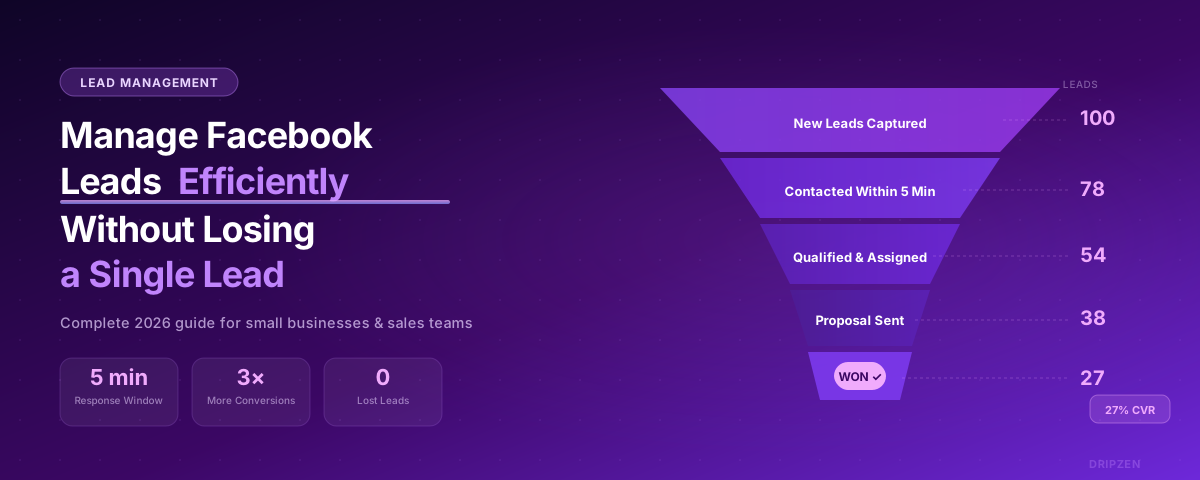
Businesses that consistently convert Facebook leads follow a simple process — every lead moves through a defined journey:
At any point, the business knows: how many leads exist, where each lead is in the pipeline, who owns it, and what action is required next. This creates visibility, accountability, and predictability.
The 7-Step Facebook Lead Management Framework
Step 1: Capture Leads Instantly
Manual CSV exports create delays. By the time someone downloads a file and shares it with the sales team, valuable time is already lost. The ideal setup automatically captures new leads the moment they are generated — no manual work, no delays.
Step 2: Notify the Right Person Immediately
Every new lead should trigger an instant push notification to the responsible salesperson. Fast response creates a competitive advantage. Many businesses win deals simply because they contacted the prospect first.
Step 3: Assign Lead Ownership
Every lead should have one clear owner — not a team, not a department, one person. Ownership creates accountability. When ownership is unclear, follow-up becomes inconsistent.
Step 4: Use a Visual Pipeline
A visual pipeline lets everyone instantly identify hot leads, stuck opportunities, deals at risk, and revenue opportunities — without digging through spreadsheets. Your pipeline becomes the command center for your entire sales operation.
Step 5: Standardize Follow-Up with Templates
Most businesses waste time writing the same messages repeatedly. Create message templates for first contact, follow-up reminders, appointment confirmations, proposal sharing, and re-engagement. Templates increase both consistency and speed.
Step 6: Measure Team Performance
You cannot improve what you don't measure. Track response time, contact rate, conversion rate, leads assigned, leads won, and leads lost. These metrics quickly reveal bottlenecks and opportunities.
Step 7: Follow Up Until a Decision Is Made
Many leads require multiple interactions before deciding. A good Facebook lead management process ensures every lead receives appropriate follow-up until they buy, decline, or become inactive. Never assume “no response” means “not interested.”
Why Excel and Google Sheets Stop Working
Spreadsheets work when you have 5 or 20 leads. Problems emerge at scale — when you have 100+ leads, multiple salespeople, multiple campaigns, and multiple follow-ups running simultaneously. Spreadsheets cannot provide:
- Real-time lead notifications
- Lead ownership tracking
- Pipeline visibility across the team
- Team collaboration tools
- Mobile-first lead management
As businesses grow, spreadsheets become bottlenecks — not tools.
Signs Your Business Needs a Better Facebook Lead Management System
You likely need a dedicated Facebook Leads CRM if any of these sound familiar:
- Leads sit untouched for hours or days
- Team members ask who owns a lead
- Follow-ups are inconsistent or forgotten
- Facebook leads are stored in spreadsheets
- Managers lack visibility into pipeline performance
- Leads are being lost despite strong ad performance
- Salespeople complain about lead tracking
- You cannot accurately measure your conversion rate
If several of these sound familiar, you're likely losing revenue every week.
How Modern Businesses Manage Facebook Leads
Leading businesses use systems built specifically for Facebook lead management. Instead of manually downloading leads and updating spreadsheets, they:
- Capture leads automatically the moment they arrive
- Receive instant alerts on their phone
- Assign ownership immediately
- Manage leads through a visual pipeline
- Track every interaction and follow-up
- Monitor team performance in real time
- Access lead information from anywhere, on any device
This reduces response times and improves conversion rates significantly — often without spending a single extra dollar on advertising.
Meet DripZEN: The Facebook Leads CRM Built for Speed
DripZEN was built to solve exactly the problem this guide describes. Businesses spend money generating Facebook leads but lose opportunities because follow-up systems are broken.
With DripZEN, your team can:
- Capture Facebook leads in real time — no manual exports, no delays, no missed opportunities
- Manage leads through a visual pipeline — New → Contacted → Qualified → Proposal → Won
- Get instant push notifications — the moment a new lead arrives, your team is alerted
- Assign leads to team members — clear ownership, zero confusion
- Use ready-made message templates — respond faster, stay consistent
- Access everything from your phone — office, travel, or remote
The Real Goal Isn't More Leads
Most businesses don't need more leads. They need to convert more of the leads they already have. Improving lead management often produces a higher return than increasing your advertising budget.
Before spending more on Facebook Ads, ask yourself:
- Are we responding fast enough?
- Do we know where every lead is in the pipeline?
- Is every lead clearly assigned to someone?
- Are we following up consistently?
- Can we see our entire pipeline at a glance?
If the answer to any of these is no, fixing your Facebook lead management process may be the fastest path to increased revenue.
Final Thoughts
Facebook Lead Ads can generate incredible opportunities — but leads only become customers when they are managed properly. The businesses that win are not always the ones generating the most leads. They are the ones responding faster, following up consistently, and maintaining full visibility throughout the sales process.
Whether you use spreadsheets, a CRM, or a dedicated Facebook lead management platform like DripZEN, the goal remains the same: never let a valuable lead slip through the cracks. Because every missed lead is more than just a missed opportunity — it's revenue you've already paid to acquire.